Posted on July 31, 2024
Poem: Searching
By Audrey Todd
M.Div., M.A.C.E. UPSem ’10
We have questions.
Why the hatred?
Why the pain?
Why the violence?
Why so much greedy, ill-gotten gain?
We’re searching for answers everywhere—Real or imagined friends on social media.
Searching in bottles and pill boxes.
We’re searching.
We’re asking our so-called Boos who disappear like ghosts.
Here today gone tomorrow
Why?
We’re searching for answers, scrolling day and night.
We’re searching for fame and fortune.
Some searching suffers from unscrupulous motives
While the unhoused are lying on sidewalks and under bridges.
Some are searching
while our schools are near dilapidation.
We’re searching for answers.
We protest to voice our discontent
We VOTE—it makes a difference!
Keep searching
Many scroll the Word of God, less often.
Many have laid the Word of God in an invisible coffin.
Yet, it’s our lifeline.
We shout
We pray
We praise
We love
But, we find we ourselves still searching.
Truth be told, the answer is before us.
It is in the power and the presence of the Holy Spirit who teaches us all things and brings all things God told to us to our remembrance. (John 14:26)
Continue to search and study the Word of God. Never stop searching it!
UPSem Leadership Institute
By Chris Burton
D.Min. UPSem ’23
This fall at the Leadership Institute we have an exciting schedule coming up! Workshops, Book Clubs, Certification Courses and more!
Let’s start with our Educator Certification Courses, shall we? We have Worship and Sacraments, led by Dr. Becky Davis, which starts on August 1 followed by Faith/Human Development, led by Dr. Lakisha Lockhart, which starts on October 8. These courses help those who seek to become Certified Christian Educators within the PC(USA), and all are welcome to register!
Our Pathways courses are geared to help those who aspire to become Commissioned Ruling Elders and Commissioned Lay Pastors. Starting August 26, Rev. Carson Rhyne will lead our Polity and Administration Pathways course. On October 17, Dr. Cindy Kissel-Ito will lead our Teaching the Bible Pathways course. All are welcome to participate in these courses!
Next, we have an exciting slate of podcasts. It was a joy to sit with Dr. Brian Blount and Rev. Alex Evans as they spoke about their upcoming workshop, “Biblical Preaching and Pastoral Leadership for Complicated Times.” The workshop will run from October 7-9 on our Richmond Campus.
Speaking of Dr. Blount, have you seen his presidential portrait? I had a chance to speak with the artist responsible for his painting as well as the paintings of Dr. Syngman Rhee and Dr. Katie Geneva Cannon. His name is Stanley Rayfield, and I cannot wait for you to hear our conversation!
On September 28, on our Charlotte campus, we are partnering with our friends at the Center for Social Justice and Reconciliation to host the “Practicing Resurrection” lecture. Dr. Janet Wolf will be speaking, and you can get well acquainted with her work by joining the Practicing Resurrection Book Club that starts September 3.
On October 1-3 we will have the Mid-90s Alumni Reunion. Alums from that era of the seminary gathered last year and had a wonderful time. Now they want to have alums from all eras including PSCE, UTS, Union-PSCE, and UPSem to come together to learn and fellowship! I had a chance to feature the organizers of this event on the Leadership Institute Podcast as well.
2024 is a giant year for the Waldensian community. In October, the Leadership Institute will collaborate with Dr. Elizabeth Hinson-Hasty to host a webinar to speak about the history of the Waldensians and their legacy of social witness.
For those of you in the Presbytery of New Hope, Dr. Rodney Sadler will be leading a Clergy Retreat from October 14-16.
Did you know that the Leadership Institute has two asynchronous courses that you can take?
The Old Testament and New Testament survey courses are a wonderful companion for those new to reading the Bible and for those who want to improve their Biblical literacy.
Phew! As you can see, we have an action-packed fall planned for you! For more information, including registration links, visit us at leadershipinstitute.substack.com.
A Dynamic Faith from Rev. Robert Goodrum*
Provided by Rev. Veronica Martin Thomas
MSW, Virginia Commonwealth University ’73; M.Div., Union-PSCE ’07
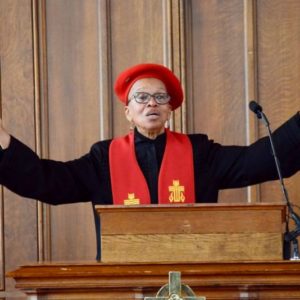
Rev. Veronica Thomas
Hebrews 11:6, Ezek. 22:30, Acts 1:8
Rev. Robert Goodrum, director and founder of YOURS (Youth Outreach Urban Resources Services) was invited to address members of twelve local organizations and ministries in Norfolk, Virginia who jointly endeavor to promote excellence in the schools. He founded and incorporated YOURS in 2005 with the mission, “to give every teenager an opportunity to experience positive life outcomes through Christian-based values and to nourish their faith within a multi-cultural peer group of their school and community.” Rev. Goodrum* preached an anointing Word. He granted us permission to share this message with our Union alumni. I am confident that it will be a blessing to you.
Dynamic Faith: Share a Story
I was ten years old. I wanted to know if God was real. I had just given my life to Christ at my church and felt saved. I came home all excited along with my mother, who told my stepfather what had happened at church. My stepfather became a little irritated that I had made such a decision at such a young age and told me I knew nothing about being a Christian and who God was. I was so upset that I ran out of my house crying with my basketball in my hand and went to the local playground basketball court. I got at the half court line and told God if He was really real to make this basketball go through the hoop. This was a shot my friends and I practiced and never came close to touching the rim. I threw up the ball with all of my might and swish went through the net. I was so happy and overjoyed that I said to God: “Again! If you are really, really, real, make this ball go through the hoop and swish it again!” It did!! I was the happiest ten-year-old in the neighborhood, if not in the world!
That day my faith grew. I truly believed in God and He was real to me. Since then, God has continued to prove Himself to me and has help my faith to grow into a dynamic force in my life. I am so glad that my faith didn’t stay at that childhood level because at twelve years old, I was making that shot with my own ability.
Preach the Text
Today, I want to talk with you about “A Dynamic Faith.” What is required to have a Dynamic Faith—a faith that believes whatever God says will happen is going to occur and whatever God says He will provide, it will be there. How many of us have a faith like this? Lord, you said it so it shall be done, and I am just going to believe and walk in it. At some times, my faith is like this, but most of the time I am lacking that Dynamic Faith evident in trusting and believing. The Lord must keep holding my hand and pulling me along the way. He must keep telling me to open my eyes to see His handiwork or keep telling me to take Him out of the small box I have put Him in and allow Him to express Himself in imaginable ways of which I never thought. Do you have a Dynamic Faith?
In Hebrews 11:6, Paul makes a statement that is very challenging and eye opening. He says without faith it is impossible to please God. He lets us know that we can bring pleasure to God; we can please God in a way that He will accept and respond mightily. But all of this depends on our faith and trust in the Lord. How many of you, if you can please the Lord, would want to do so? Sure, we would. All of us would delight in bringing pleasure to the Lord. Today, I will speak to you about a Dynamic Faith and what it takes to get or to develop a Dynamic Faith. I have a few suggestions or thoughts that I think may help. Is it alright if I share them with you? Paul said we must first believe that He is—God exists. How do we go about this process of believing He is, that He exists?
1. Faith requires pictures. It is the product of clarity. When you have a picture of something, you have more than just words, you have a clear understanding of what you are trying to express or trying to achieve. Have any of you tried to put a puzzle together without looking at the picture of the puzzle first? It becomes very difficult with the greater number of pieces. Oh, it’s easy with a ten-piece or twenty-five-piece puzzle but once you hit a hundred pieces or more it requires a picture to look at every now and then. So it is with our faith, especially if we are trying to achieve that dynamic faith or the impossible believing faith.
Here are several exemplars:
God took Abraham outside and showed him the stars in the sky and promised him that he will multiply his seed as the stars of the heaven and as the sand which is upon the seashore (Gen. 22:17). Abraham was given a picture, and his faith grew as his imagination became unlimited.
You remember the story of Peter and how God gives him a vision of diversity through the food He presented to him to eat in that vision. Peter realized that the Gospel message was for everyone and for all people (Acts 10:8-16). He must go and tell the truth of Jesus Christ, not only to the Jews but also to the Gentiles. Peter’s faith grew that day because he had a picture.
I can remember as the Lord was calling me to youth ministry and to work with young people. I was in the Navy at the time, doing very well and getting ready to make my next move for promotion and training. God took me on a walk in the city of Newport, RI and showed me the kids and how they were being trained by the devil and challenged me to be a commander for him in their lives. I had a picture from God that helped my faith to follow His call upon my life. The following year, I resigned from my active-duty commission in the Navy and started doing outreach ministry to teenagers.
How about you? Do you have a picture? Has God given you a picture or even pictures? Faith requires pictures, visions that clarify your understanding of God’s assignment for you.2. Faith is unlimited. We must remove the limits. Read Rom. 10:17 “So then faith cometh by hearing, and hearing by the word of God” (KJV). How do I remove the limits? By taking in God’s word. The more I hear the word of God the more my faith grows. The more I allow the word of God to penetrate my heart, my mind and my soul, the more limitless my faith grows. It becomes a dynamic faith. It becomes this impossible, believing, working faith that works far beyond my imagination and my beliefs. Then suddenly, I am one of those crazy Christians who not only believe that God can do anything, but one who knows that God can do anything. Do I have any witnesses in this house today?
What God promises, He will fulfill. He can neither lie nor say something He cannot do. Numbers 23:19 says “God is not a man, that he should lie, neither the son of man, that he should repent; hath he said, and shall he not do it? Or hath he spoken, and shall he not make it good? (KJV)”
Faith that is unlimited is total trust in the word of God. If God said it, then it shall be done. There are no boundaries when it comes to God and His will to be done. God has unlimited resources to accomplish the things he has set forth to be done. If He has called, you to do something then you must know and believe that you have those unlimited resources as well. A dynamic faith has pictures. A dynamic faith is unlimited.
Does your faith have boundaries and limits that are hindering the wonderful things God wants to do in your life? Then you need to have dynamic faith. Is there anybody here who wants that dynamic faith? Say “Amen!”
3. Faith evinces the instructions you follow with actions that will determine your breakthrough. How many of you would try to assemble a bicycle together by using instructions for putting a basketball hoop together? They both require a wrench and a screwdriver. No, we wouldn’t do this. It just would not work. The same goes for our faith.
God gives clear instructions and guidelines on how He blesses our lives and how we receive His blessings. In 2 Cor. 9:6-8, it says … “But this I say, He which soweth sparingly shall reap sparingly; and he which soweth bountifully shall reap also bountifully. Every man according as he purposed in his heart, so let him give; not grudgingly, or of necessity; for God loveth a cheerful giver. And God is able to make all grace abound toward you; that ye, always having all sufficiency in all things, and may abound to every good work” (KJV). If you follow the instructions and do it right, then your life will be blessed in many ways as you give freely to the Lord. If you need blessings and good outcomes in your life then give unto the Lord your time, your money, your praise, your talents, and your energy. The instructions said He will give back to you so you will abound in all things. In Isa. 55:6-13, it says …
6 “Seek ye the Lord while he may be found, call ye upon him while he is near.”
8 “For my thoughts are not your thoughts, neither are your ways my ways saith the Lord.”
11 “So shall my word be that goes forth out of my mouth: it shall not return unto me void, but it shall accomplish that which I please, and it shall prosper in the thing whereto I sent it.”
12 “For ye shall go out with joy and be led forth with peace: the mountains and the hills shall break forth before you into singing, and all the trees of the field shall clap their hands.”
Whose instructions are you following to have a successful life? What instructions are you living by to grow your faith? The instructions you follow will determine your breakthrough. To achieve dynamic faith, follow God’s instructions. AMEN.
4. Faith has no boundaries except the ones you set. If you allow negative thoughts, negative things, and negative people to influence your outcome, then you will not receive or achieve the best outcome in your life. It goes back to the picture you have of Jesus Christ.
How do you see Jesus operating in your life? I tell the kids that John 16:24 is my million-dollar scripture verse. I see Jesus as this mad man running around with millions of dollars in his hand and asked me, “What do you want me to do for you?” When I question Him about why He wants to do this, He says I want your joy to be complete. I want you to have the best life possible for you. There are no boundaries on the things God wants to do in your life.
In Matt. 7:7-11, I see God as this great Father who wants to give his children the best things for them… If God has no boundaries in caring for us, and Jesus has no boundaries in fulfilling God’s promises in us, then why do we have boundaries, or why are we continually putting God in this little box of faith. A dynamic faith is built on the things of God and on the desires of God and not set by the boundaries of man or by your thoughts. If you believe it, then you shall receive it and achieve it (Short version of Matt. 21:22). So, faith has no boundaries except the ones you set.
5. Faith of work and action decides the timing and response of God who always reacts to our faith. God has always reacted to our faith and not to our need. Faith is the key, the explosion, the starter, the flame, that touches the heart of God and gets the ear of God to notice our need. The three Hebrews boys demonstrated their faith first and received their unimaginable blessing by God (Dan. 3:16-28). Jesus Christ going to a brutal and shameful cross of death brought life and joy to millions of people. It is you giving your tithes and offering to the Lord even though there are bills to be paid. This brings a reaction from God on your behalf. When everything is going wrong around you and there seems to be no way out, but you take time to pray and make it to the house of the Lord, this brings a respond from God to act on your behalf. “If my people who are called by my name will humble themselves, and pray and seek my face, and turn from their wicked ways, then I will hear from heaven, and will forgive their sin and heal their land” (2 Chron. 7:14).
When we exercise our faith and walk in it, it causes God to react and move by His power and His imagination for us. That’s a good thing! A dynamic faith is a faith of action and work. We must be willing to be used by God to accomplish the things of God. Faith in action brings great results. Faith without work is dead.
Concluding Thoughts
My brothers and sisters on this Pentecost Sunday: Do you have that dynamic faith? Do you have a faith that requires pictures/a vision? Do you have a faith that is unlimited? Do you have faith that follows true instructions of God? Do you have faith that has no boundaries in trusting the Lord? Do you have a faith that leads you to do the work of God and to which God will always react?
Do you have that Dynamic Faith that will trust in the Lord at any cost no matter what may come? See my friends, when Jesus was resurrected from the dead, He spent the next 40 days proving himself to be alive to his disciples and believers. But it was the day of Ascension that Jesus gave the call to his disciples to have Dynamic Faith in Acts 1:8 “But you will receive power when the Holy Spirit comes on you. Then you will tell people about me in Jerusalem, and in all Judea and Samaria. And you will even tell other people about me from one end of the earth to the other.” Wow! IS THIS A BIG ENOUGH PICTURE FOR THEM TO HAVE? Does this command from Jesus require a faith bigger than anything they could imagine? Yes, and Jesus was ready to do something about it. He told them to HOLD ON and STAY TOGETHER because in a few days He will send help to them.
Did JESUS do it? Did He send the power of the Holy Spirit upon their lives? Did He give them the faith they needed to accomplish His work? Pentecost is the day; Jesus fulfilled the promise to build the Universal Christian Church. He had gathered people from all over the known world to come to Jerusalem that day and time to witness the power of the Holy Spirit in the lives of His disciples.
The question is, “Is Jesus, still doing this today? Is He still sending out the Holy Spirit to empower His disciples to be a living witness in this dying world of darkness?” YES, HE IS!
ARE YOU READY FOR THE HOLY SPIRIT TO COME UPON YOU AND TO BE A LIVING WITNESS FOR JESUS CHRIST? ARE YOU READY FOR JESUS TO GIVE YOU THAT DYNAMIC FAITH?
Brothers and sisters, it is Pentecost Sunday! It is the day that Jesus fulfilled His promise to His disciples to give them power to be living witnesses to this lost world. Are you ready for the Holy Spirit to come by here and dwell in you with power from on high? Ask God to give you a Dynamic Faith that:
- Requires pictures or visions to clarify God’s call/assignment
- Is unlimited since there are no limitations on God
- Is built on following God’s instructions
- Has no boundaries except the ones you set
- Decides the timing and response by God who always reacts to our faith.
Thanks be to you Almighty God! Halleluiah! Amen!
Prayer: Lord, we praise you and magnify your great and holy name. We thank you for coming here and filling us with your Holy Spirit. Have your way in our lives so that we may become the instruments of your living presence in our homes, in this city, in this state, in this nation, and in the world. Make us your living witnesses, we pray. Amen!
*Sermon delivered at Royster Presbyterian Church, Norfolk, VA on May 19, 2024.
Giving Gifts! Gift Giving!
By Rev. Dr. Helen Bessent Byrd
M.Ed., Temple University; M.Div., Union-PSCE ’07; Ph.D., UConn
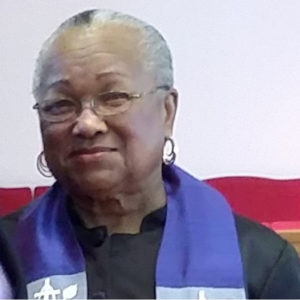
Rev. Dr. Helen Bessent Byrd
Union Presbytery Seminary (UPSem) Alumni all! Since the inception of the BAA Newsletter in 2016, it has been my joy to write in each issue encouraging Biblically based words about giving and gifts. As BAA treasurer, the focus has always been on giving to our shared alma mater, UPSem! When I anticipate writing future articles for the BAA Newsletter, this, friends, is the final one that I pen from this perspective.
Often it has been noted in these articles that giving blesses both the giver and the recipient and that gifts may vary in type. As we read in Proverbs 11:25, “A generous person will prosper; whoever refreshes others will be refreshed.” Giving makes the giver feel good afterwards. Interestingly, studies have shown a direct relation between giving to charities and two areas of the brain, one associated with dopamine which gives a natural high, and another associated with a feeling of social attachment or the need to support each other. The giver is intrinsically rewarded. The giver is reminded, however, to remain meek and unpretentious.
Paul writes in his first letter to Timothy that those who enjoy wealth in the present age, “are to do good, to be rich in good works, generous, and ready to share, thus storing up for themselves the treasure of a good foundation for the future, so that they may take hold of the life that really is life” (1 Tim. 6:18-19). We are also to be rich in doing good works, ready to share with others. Not all gifts are tangible. Giving you time doing a service for someone may be better than a gift of money or food. Just your presence or companionship sitting with a sick person may be most appreciated.
We have gifts that differ according to the grace given to us: prophecy, in proportion to faith (Rom. 12:6). Persons who sew can make stuffed fabric dolls for children who will soon have surgery will help them learn of and accompany them during their procedure. Someone who can play a piano or keyboard can make beautiful music while another person with a lovely voice can sing and together, they could provide a joyful songfest for persons in a nursing or assisted living facility.
Finally, my sisters and brothers, “do not forget to do good and to share with others, for with such sacrifices God is pleased” (Heb. 13:16). BAA appeals to you to continue to focus on giving in support of the Blount Westminster Hall renovation and to student support through the Annual Giving Fund as well as the Katie Geneva Cannon Womanist Leadership Institute. Remember to give to the Seminary so that current and future students will have the opportunity to be aided in responding to the call of God for their ministries during these challenging times. For tracking purposes, please write “BAA” on the website form and on the memo line of your check.
Posted on February 19, 2024
Greetings, Union Presbyterian Seminary (UPSem) Alums!
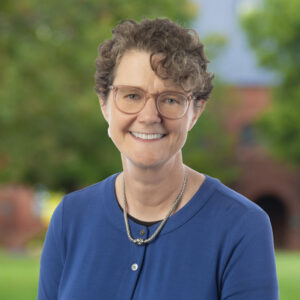
Dr. Jacqueline Lapsley
I am grateful for the invitation to contribute to this issue of the Black Alumni Association Newsletter, in which I will offer a few reflections from my first six months in office. Before I name them, one thing stands out above all: it’s been a joy to come into the UPSem community, a warm and vibrant community called to serve Christ and the church for the sake of the world. One example of that has been the gracious welcome I have received specifically from the Black Alumni Association – I am so grateful!
Other reflections upon entering the UPSem community:
1) Union’s commitment to congregations and to forming pastoral leaders for congregations is impressive. I’ve been in theological education a long time and I can say that our relationships with congregations are very strong, indeed.
2) We have a wonderful and increasingly diverse faculty, some of the finest educators anywhere, whose teaching can change and is changing the world. Their expertise and their dedication to their students is inspiring. Diversifying our faculty, student body, and staff will continue to be a priority in the years to come, as well as ensuring that everyone at Union feels a powerful sense of belonging.
3) We have a dedicated board and a great team of staff committed to the mission of UPSem. People come to work at Union, and they work hard, because they care about the mission.
4) Union has been doing a wonderful job of living into its mission of forming leaders for congregations and other ministries, AND there is so much more we can do. More we can do to maximize the impact of the excellent theological education we offer. We can reach more people, educate more leaders for ministry, and we can enhance the ways we prepare those leaders for the church and the world of the future. We are in the midst of strategic planning for the next five years so you will hear more about initiatives around these ideas in the next few months.
I believe the time is now to refocus our attention on the boundless opportunities that God has set before us. We are stewards of a great gift that the world urgently still needs today: a compassionate and joyful gospel that leads to newness of life and flourishing for all humanity and all creation. More than ever we are called to proclaim that gospel in new and creative ways. I am grateful to you, the members of the Black Alumni Association, for your partnership in that holy work for the sake of the church and the world that God so loves.
Faithfully,
Jacq Lapsley, President
Poem of Sending
By Elder Donna A. Graves
Eastern Virginia Presbytery Candidate for Ministry (PCUSA)

Donna Graves
In the shadows of history, a question persists, whispers of prophets, have you been missed? Elijah on Horeb, feeling alone, A plea to the heavens, a heart-wrenching moan.
In the tapestry woven by struggle and strife, a call echoes forth, awakening life. Black woman standing, shoulders strong, the legacy of kings, the rhythm of a song.
Is it you, in the silence profound? The next great prophet, in your heart, is found. The spirit of justice, a flame burning bright, in the depths of the struggle, a guiding light.
Resilience wrapped in melanin’s embrace, strength in the struggle, the beauty of grace. The call to prophetic, in the air it weaves, from ancestors’ whispers, the heart retrieves.
Is it me? Is it you? Is it us, in this space? Prophetic voices, an empowered embrace. Not on a mountaintop, distant and far, but, rising as one, like the North Star.
A Black woman’s perspective, a powerful view, carrying, stories, dreams, and struggles anew. The challenge accepted, the call to proclaim, in the face of injustice, to change the game.
So, in response to history’s resounding plea, “Yes, it could be me. It could be you. It could be we.” United in purpose, in justice we trust, the next generations of prophets, rising from dust.
The legacy of Martin Luther King, Jr. challenging us to step into the void he left behind. The struggle for justice and equality continues, and the call for prophets who will speak truth to power persists.
And so, with hearts on fire and voices clear, let this charge be heard, discard every fear. In the footsteps of giants, we boldly trod, for justice, equality, let us rise, O kindred souls and march on till victory is won!
Black Lives Matter: African American Politicians Who Became Governors!
By Rev. William R. Freeman
M.Div., Union-PSCE ‘01
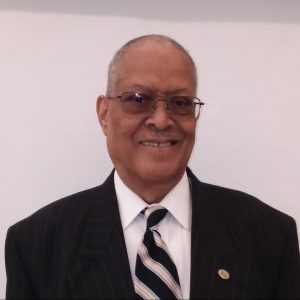
Rev. William Freeman
Just before Christmas 2023, while watching a news broadcast, I was introduced to a person I had never heard of, a Mr. Garlin Gilchrist, the Lieutenant Governor of the state of Michigan. That got me to thinking of this question: “How many African American Lieutenant Governors have there been, and how many of those have gone on to become Governor?” Well, my Google research shows that the total number of past and present African American Lieutenant Governors is thirty-five (35), of whom only two (2), L. Douglas Wilder, and Deval L. Patrick have been elected Governors by the constituents of their respective states, the Commonwealth of Virginia and the Commonwealth of Massachusetts respectively. The Honorable L. Douglas Wilder served as governor from January 13, 1990 to January 15, 1994, one term, as prescribed by Virginia State law and The Honorable Deval L. Patrick served from January 4, 2007 to January 11, 2015, two terms by state law.
However, Governor Wilder, who is presently in his mid 90’s, still remains one of the most powerful voices in Virginia politics.
On November 8, 2022 a third African American, Wes Moore, although not previously a lieutenant governor, joined Governors Wilder and Patrick by being elected governor by the voters in the State of Maryland. Now, you might say, there have been other African Americans who have been elevated to Governor, and you are correct. However, the operative word here is “ELECTED.” Three (3) additional lieutenant governors have also become governors but that has been due to the office of governor being vacated for various reasons: the elected governor dying while still serving, illness or injury, being accused and/or convicted of a crime while serving in office or resignation. There have been three (3) African American lieutenant governors who have become governor via these methods. During Reconstruction, The Honorable Oscar James Dunn, the first Black elected lieutenant governor was also the first acting governor of a U. S. State who was elevated to become governor of the State of Louisiana when Governor Henry Clay Warmouth was injured in 1871. Also during Reconstruction, Pinckney Benton Stewart Pinchback known as P. B. S. Pinchback became the second African American elected to serve as lieutenant governor of Louisiana. He was also elevated to Governor upon the death of Governor Dunn and served as Acting Governor from December 9, 1872 to January 13, 1873.
Most recently, The Honorable David A. Paterson was elevated to governor of the State of New York, serving from March 17, 2008 to December 31, 2010 succeeding Governor Eliot Laurence Spitzer who resigned after it was uncovered that he patronized a prostitution ring. As you can see, as of this writing in February, 2024, the list of African Americans who have been elected or elevated to governor is very small, six (6) to be exact; not because of qualifications, but due to racism. However, just like white America pushed the idea that Blacks did not have the ability to become successful baseball players; or are not smart enough to play the quarterback position on college or professional football teams, or integrate colleges, or play on college basketball and other sports teams. This author asks you, the readers of this BAA Black History Month newsletter, to look at the composition of today’s baseball, basketball, and football teams such as the Boston Red Sox; New York Yankees; Atlanta Braves; Kentucky Wildcats; Alabama Crimson Tide; Clemson Tigers; South Carolina Gamecocks; Ole Mississippi Rebels; Tennessee Volunteers, Georgia Bulldogs, Virginia Cavaliers to name a few. I venture to say without Black athletes, colleges and professional sports nationwide, would not be the same! Nor would national, state and local governments!
The good news is that at present, there are eight (8) African American men AND women serving as Lieutenant Governors. I pray that they will aspire to join the ranks of the six (6) lieutenant governors who became governors identified in previous paragraphs. They are: Austin Davis – Pennsylvania; Antonio Delgado – New York; Sabina Matos – Rhode Island; Mark Robinson – North Carolina; Winsome Sears – Virginia; Juliana Stratton – Illinois; Tahesha Way – New Jersey; and of course, Mr. Garland Gilchrist – Michigan. In addition, there are seven (7) other non-white men and women who are serving as elected lieutenant governors: Peggy Flanagan – Native American – Minnesota; Michelle Lujan – Mexican American – New Mexico; Sylvia Luke – Korean American – Hawaii; Aruna Miller – Indian American – Maryland; Howie Morales – Mexican American – New Mexico; Jeannette Nunez – Cuban American – Florida; Kevin Stitt – Native American – Oklahoma.
Lastly, although American history does not support it, my prayer is that more of these non-white lieutenant governors will run for and be elected to the highest state government offices in the United States of America.
Gems for the Journey: Let the Fruit Grow
By Rev. Veronica Martin Thomas
MSW, Virginia Commonwealth University ’73; M.Div., Union-PSCE ’07
Rev. Veronica Thomas
“But the fruit of the Spirit is love, joy, peace, longsuffering, gentleness, goodness, faith, Meekness, temperance: against such there is no law” (Galatians 5:22 – KJV).
In the early eighties I truly began to seek God fully and “to become strong in Him and His might.” I asked Him to manifest the gifts of the Holy Spirit in my life. God told me that I could not have the gifts without the fruit. As I meditated on his response it became very clear to me what he meant. If I was given the gift of healing and did not have the fruit of longsuffering I would be unable to withstand God’s timeline, not mine, for complete healing. And if I was given the gift of interpretation of tongue and did not have the fruit of self-control, translating would be subject to my motives. I would be depending on the flesh, not the Holy Spirit. The gifts are not to be exercised except by fruit of the Spirit, which is love. Neither you nor I can exercise a gift of the Spirit without having the fruit of the spirit. Love is powerful. I Peter 4:8 declares, according to the Message Bible, “Most of all, love each other as if your life depended on it. Love makes up for practically anything.”
The Holy Spirit wants to produce fruit – it is called the fruit of the Spirit in God’s children (us). “The fruit of the spirit is love, joy, peace, longsuffering, gentleness, goodness, faithfulness, meekness, and self-control. Notice it is singular: is, not are. You can disagree with the grammar used here, however Professor Carson would argue, it happens to be singular in the Greek. This indicates that love is the fruit and from it stems all other fruits.
The fruit of the Spirit is love. Love never fails and if we substitute God for love, it reads God never fails. The fruit of the Spirit should characterize the lives of believers. That’s us. When I tell others if you belong to the true and living God, the fruit of the Spirit should be manifested in your lives. I am telling sometimes accused of judging them. I denounce that and declare God has given me permission to be a fruit inspector and I have the right to look at the fruit you are producing. And guess what? You have the same right to look at what fruit I am producing. There will be no oranges on an apple tree, no nectarines on a lemon tree. You get the idea! The fruit is produced in our lives by the Holy Spirit. Jesus wants to live His life through us. The fruit of the Spirit is the virtues of Jesus and if we are made in God’s image, we must demonstrate on show the fruit of the spirit in our daily lives.
The fruit of the spirit is love and love is manifested in eight characteristics of love. Joy is love’s strength, peace is love’s security, long-suffering is love’s patience, gentleness is love’s conduct, goodness is love’s character, faithfulness is love’s confidence, meekness is love’s humility and self-control is love’s victory. There is no other answer.
As we live out the “fruit of the spirit” God had a progression in mind when He inscribed these words. Love is the answer to all hurt, harm, and danger. Love produces joy (exuberance about life) and joy manifest peace (serenity) and peace will manifest longsuffering (a willingness to stick with things), longsuffering will manifest gentleness (how we handle ourselves), gentleness will manifest goodness (a sense of compassion in the heart), and goodness will manifest faithfulness (acting like God is telling the truth), then faithfulness manifests meekness (not needing to force our way in life) and meekness manifest self-control (able to direct our energies wisely). Men and women of God that’s living a Godly productive life.
The fruit of the spirit provides a road map for breaking the chains of racism. I challenge all of us who are reading the article to pursue a path of love manifested in joy, peace, longsuffering, gentleness, goodness, faithfulness, meekness and self- control, to include understanding and unity that reflects the transformative power of Galatians 5:22-23 that the fruit may grow in us. Amen. So be it.
Promoting CommUnity in Difficult Times
BY REV. DR. HELEN BESSENT BYRD
M.Div., Union-PSCE ’07; Ph.D., UConn
Rev. Dr. Helen Bessent Byrd
Ephesians 4:7-16
The Book of Ephesians was written in about year 70 of the Common Era primarily addressing the Gentiles who had become Christians. The Jews, people of Israel were insiders; the Gentiles, Greeks or Hellenists, were outsiders. Dissension and division were prevalent among them. The message is to believers in the church to get along with each other. So, this epistle and most especially Ephesians 4:7-16, focuses on promoting unity and building community to decrease the division in the body of Christ (the church). After all, there was to be unity in this diversity because God is the creator of all creation.
There are many different kinds of spiritual gifts – particular ways to share blessings with others. God has enough to go around to each of us. Foundational for us all should be humility, gentleness, patience and love. In the scripture cited above, there are four spiritual gifts cited: apostles who pioneered church growth, prophets who speak God’s words to particular circumstances, evangelists who are storytellers that share the gospel and bring people to Christ and pastors and teachers who care for and teach local congregations. Now friends, these gifts are not limited to any class and fit in no hierarchy. We should always remember that all our gifts come from God, we all have gifts, each of us has different gifts, and God wants and expects us to use our gifts.
The author of Ephesians tells us in verse 15 that we should serve until the whole body of Christ is built up so that we might achieve unity. Consonant with this message, the Book of Order espouses that the unity of the Church is a gift of the Lord and each congregation promises and covenants to live together in unity (BOO G-41.0201). Unity of all persons in each council should be evident. The General Assembly constitutes the bond of union, community, and mission among all its congregations and councils, to the end that the whole church becomes a community of faith, hope, love, and witness and keep before it the marks of the Church and the Six Great Ends of the (BOO G-3.0501).
So, let us be encouraged. Know that God has given each one of us a generous portion of all of these gifts and more. Even in this present time when there are some among us who are proponents of division based on race, class, ability, sex and sexual orientation, there is a preponderance of persons who have agency to give prophetic witness, audaciously speaking out and raising critical questions about moral and social issues in legislative, judicial and socio-political contexts. Many pastors as well as lay and ordained men and women of the church do boldly proclaim the Word of the Lord winning souls by God’s grace and leading in the governance of congregations.
Let us hold fast to the guidance that Elizabeth Taylor gave when she received an honorary Oscar for her work in fighting AIDS in 1993. She said, “I call on you to prove that we are a human race and that our love outweighs our need to hate, and that our compassion is more compelling than our need to blame.” I encourage you to continue the good work that you do showing love to all providing support for quality public school education, supporting health services for citizens and meeting needs of children and adults all across the world. Remember, “It is in loving, not in being loved that the heart finds its quest; it is in giving, not in getting that our lives are blest.”
Too often, we struggle to live in unity, dividing along the fault lines of our societies. Ruptures occur, occasionally of earthquake proportions.
Divisions occur in our families, among friends, in our particular churches, in our denominations, in our nations, and in our transglobal relations. Let us be leaders in tearing down the walls that divide us. We give thanks to God for leading us to empty ourselves of selfishness and giving ourselves to service like Jesus Christ. Unity to be real must stand the severest strain without breaking (Gandhi). Keep this belief about life: Life can’t give me joy and peace; it’s up to me to will it. Life just gives me time and space; it’s up to me to fill it.” Using your spiritual gifts and working together, we can achieve both unity and community while maintaining a wholesome respect for diversity. Thanks be to God! Finally, let us remember to give to UPSem so that others may have the rich quality experience that you had preparing to serve Christ and the church for the sake of the world.
My Book on the Rural Black Church
BY REV. DR. LEONARD EDLOE
Pharm.D. UFL ’03; M.Div. STVU ’99; Th.M UPSem ‘2018
Rev. Dr. Leonard Edloe
In November of 2023, what started as a thesis in 2017 was finally published as the book: Restoring The Glory – Breathing New Life Into the Rural Black Church.
The thesis that resulted in the book was something that was not planned, but the result of several factors, the first being the proposed merger between The George W. Truett Theological Seminary in Waco, Texas and what is now Leland Seminary in Arlington, Virginia. I was teaching Christian Ethics at Leland without a terminal degree in theology. My doctorate is in pharmacy and for years I had authored articles on the conscious clause: the involvement of pharmacists in lethal injections and other ethical issues.
I entered Union Presbyterian Seminary in 2016 intending to study the Theology of Dr. Martin Luther King, Jr. In fact, I audited a course on the theology of Dr. King during the spring semester prior to enrolling. While taking that course, I encountered the work of Dr. Raphael Warnock: The Divided Mind of the Black Church, Theology, Piety and Public Witness. My focus started to turn to Personal Salvation and Social Christianity: Doing Ministry in the Real World.
The real world for me, however, was the Rural Black Church, where I had been serving for 20 years. My studies kept directing me to this institution that has survived despite the lack of many of the resources others take for granted. One day, as I went through one of Dr. Katie Cannon’s famed bibliographies, I discovered the title, Dark Glory, A Picture of the Church among Negroes in the Rural South, by Dr. Harry V. Richardson. At that time, I did not know that Dr. Richardson was one of Dr. Cannon’s professors when she was in seminary.
I begin my book talking about the strange journey of a city boy who grew up in the Methodist tradition and became the pastor of a Rural Black Church after years of serving in numerous roles, including Certified Lay Speaker, and then moving on to an Urban Mega Baptist Church, where I was licensed and ordained, and led several ministries. My next move was from United Methodist Church where Bishop Leontyne Kelly, a graduate of Union Presbyterian Seminary and the first African American Woman to serve as a Bishop in the United Methodist Church.
I have always felt the Church should take steps to improve the economic situations of their members and the communities they serve. I feel that I have taken solid steps to make that happen and have seen the results in many small ways.
My book is historical in several ways. It discusses the formation of the Rural Black Church, a church that exists because of location and racism. The book is historical because it draws from the work of Dr. John Malcus Ellison, the first African American president of Virginia Union University who authored an article on the Rural Negro Church in 1930 and also the book Dark Glory, A Picture of the Church Among Negroes in the Rural South by Dr. Harry V. Richardson, who founded the Interdenominational Theological Center in Atlanta. I then take on the task of defining the Rural Black Church. The fact that it is in many instances a Family Church. I examine the Pastor, officers and their power sharing followed descriptions of the organizations, ministries, the building and its content. I then engage the theology of the Rural Black Church that is in many instances personal piety. I also looked at past studies and their findings then devote a chapter on theo-ethical Issues facing the Rural Black Church. The issues I discuss are developed by answering the questions who/what/why that Dr. Cannon so often used as part of her pedagogy.
I included an article I authored as a student at the Samuel Dewitt Proctor School of Theology at Virginia Union University on whether the Black Church in general and the Rural Black Church in particular were either an impediment or instrument of black economic empowerment.
The next chapter discusses education in the Rural Black Church, both Christian Education and general education. In the appendix I include curriculum for the “Summer School on Sunday” Initiative that I teach at the Church where I serve as pastor.
I then deal with the challenges the Rural Black Church faces in the twenty-first century along with its relationships with seminaries and denominations.
The book closes with a chapter entitled, “Where Do We Go From Here” that examines the challenges, the use of technology, the need to reject patriarchy, theology, empowering the membership, serving the community, and the need to change the language spoken in the Rural Black Church.
I feel this book is historical because to my knowledge, it is the first book written on the Rural Black Church in over 70 years. I hope that it inspires others to examine the institution. I also pray that this book will be instructive to young seminarians who begin their ministry in a rural environment with which they are totally unfamiliar. Hopefully pastors, officers and members of the Rural Black Church will be inspired to bring about the necessary changes to Restore the Glory!