The In-Between
by Brittany Bryan
Today was our last day on this travel seminar, and the weather was exactly as it has been every other day on this trip – unfairly beautiful. A perfect day for our sightseeing tour of the Jewish Quarter in Krakow. We split into two groups and climbed into our big electric golf carts. Immediately, I noticed that the shining sun in the cloudless blue sky, along with the bright yellow color of the golf carts we were zipping around in, formed a vivid contrast against the somber gray hush of the stone walls of the Jewish Quarter.
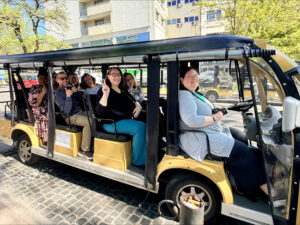
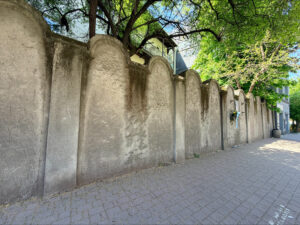
We saw synagogues and stopped at stores in neighborhoods where Jewish folks lived and thrived before the war; before they were displaced from their homes and forced into the ghettos. While in the Jewish Ghetto, we stopped at a place where part of the wall still stands; the wall that was meant to isolate and dehumanize the Jewish people in Krakow, dividing them from the rest of the city and from humanity. A memorial plaque there reads,
“Here they lived, suffered and perished at the hands of Hitler’s executioners. From here they began their final journey to the death camps.”
Here they lived…. what a haunting image.
We stood silently at that wall, staring at a place that saw the worst of what the human heart is capable of. A place that now represents what was, so that we may never allow it to occur again. And I thought about all of the moments over the past two weeks where we stood in the space between. The space between the past and present; between horror and hope.
We have stood in many places where unimaginable atrocities were committed and where daily life now just carries on. We have sat in classrooms to learn from theologians and we have knelt in dirt to clean gravestones. We have gathered and laughed in the wake of immeasurable suffering and loss, over delicious meals in locations where insatiable hunger and yearning occurred. We have cried tears of sorrow and anger, and have learned from the resilient that laughter and humor is part of the grieving – and the healing – process. We have discussed restoration and wondered whether repair is truly possible. We have said prayers where many went unanswered. We have touched history and asked it to remain with us. We have stood alongside each other in the space between the how did we get there and how do we never go back there again?
Something our tour guide, Martyna, said about the importance of not being passive hit home for many of us. As she spoke about how the Jewish people were forced into the ghettos and ultimately into the death camps, she pointed out that no one did anything to stop it; the propaganda was that effective. Unaware that we were seminary students – or part of any religious community – she offered these profound thoughts (that were not in her script) about the past in a way that speaks powerfully into our present. She said,
“By being passive, you allowed for crazy heads to rule and you let it happen. You can never be passive. We all have the same blood, there’s no purple or blue in our veins. We are all the same. You can’t be part of any group that believes propaganda. And if you believe in God, you CAN’T allow this to happen.”
Frequently throughout this trip, it seemed the chasm between horror and hope was so vast, it seemed insurmountable. But as we watched people doing the work of reconciliation in Germany and Poland in the ongoing aftermath of the Shoah, it gave us all a little hope that maybe we can do our part, in our own unique ministry contexts, to keep closing the gap between horror and hope. Because while we are leaving with a lot of heaviness and heartache, and with much processing work still to do, we all know one thing for sure: we cannot be bystanders where there is injustice. We will not be passive.
When the horrors persist, then so must we.
Onward.