No Rizpah Standing Watch: Reflection on The New Cemetery of Wroclaw
by Cedric Lundy
Dandelion wisps floated in the morning breeze across the grounds. Grounds paved with stone bulged by roots of old trees that created a canopy of silence and shadows. All around, many of the trees were covered with ivy that had grown wild, which on the ground concealed much of the broken and cracked stone. Ivy that engulfed the ruin of memory and remembrance, the deeper we explored these grounds. Grounds that were meant to be sacred. Grounds that were meant for rest. Rest for many of those who had walked the earth during the time of war and far worse horrors. Horrors that should never be forgotten. Horrors that should not follow them to the grave. And yet followed they had, because there was no Rizpah standing watch.
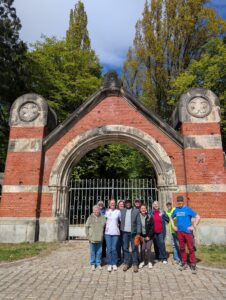
Amongst the wildness springing from the earth were graves. Not just any graves, but graves specifically for Jews of Wroclaw. This was a Jewish cemetery. Created in 1904, this cemetery was not only meant to be the final resting place for Jewish folks who lived in the area, but its centerpiece was a memorial to the Jews who had died fighting in the two Great Wars. It was meant to be the final resting place for Jewish folks who came to rest due to the unrest of systematic unaliving, murdering of them, during the holocaust. However, there was little rest to be seen or felt. The wild of anti-Jewish violence was visited upon them even in death, because there was no Rizpah standing watch.
Rizpah was the concubine of the first king of Israel, Saul. The two sons she bore to Saul were unjustly murdered under the guise of atoning for the bloodguilt of Saul in order to end a three-year famine. After their execution, ordered by David for his own political aspirations and carried out by the Gibeonites to settle old scores, Rizpah does the unimaginable. In radical defiance of what David has brought to bear, she took a sackcloth and spread it out over a rock and kept vigil over the bodies of her sons, which had been left to rot in the sun. Day and night for five to six months, she never left their side, making sure that the birds and other wild animals did not touch their bodies. She made sure their bodies were not desecrated until David was convicted and gave them, along with Saul and Jonathan, a proper burial.
The graves at the New Cemetery in Wroclaw had no Rizpah. There was no one standing watch. It should have been level grass and clear grounds so that visitors could pay homage to the dead. Instead, the violence and anti-Jewish hate continued to pursue them in death through vandalism and destruction of the chiseled stone that marked what was supposed to be their final resting place. But they had no rest because Rizpah was not keeping a vigil. Instead was headstone after headstone lying in ruin. Split stone like rubble lying in heaps covered in ivy and long grass.
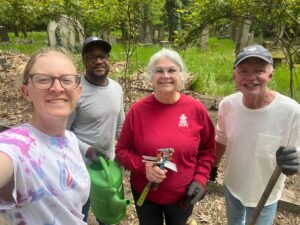
We came to the cemetery thinking we were going to clean. We had no idea we would be walking into the absence of Rizpah. We tidied out an assortment of rose beds scattered across the grounds. Rose beds far fewer in number than the fragments etched with memory lying scattered on the ground. Our work means that, yet again, with the season, the roses will once again return. But what the New Cemetery needed is for Rizpah to return.
Not a Rizpah covered in the stench of death, protecting the rotting remains of her sons from birds and wild beasts who would pick off the remaining flesh from bone. A Rizpah covered in dandelion fluff, dirt, and the stench of their own sweat. Return of a Rizpah who will pull loose the wild grass and ivy that muffles remembrance and memory wanting to be seen spoken aloud. A Rizpah whose hands will become calloused from resetting and hewing back together the toppled stones of names and remembrance. May Rizpah return soon, so that they may finally have rest and no longer be subjected to defilement in death.