Heimat
by Katelyn Finch
What makes you feel at home? How do our bodies remember? How do we hold despair and hope at the same time? Where is God in all of this?
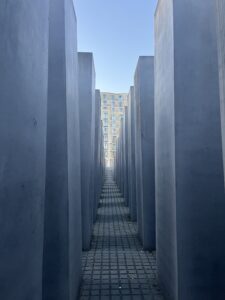
These questions lingered with me over the past two days as we moved through Berlin. Yesterday, after visiting the Memorial to the Murdered Jews of Europe, we traveled to the New Synagogue Berlin, where we had poignant conversations about life in the surrounding Jewish community before, during, and after the war. At the end of the tour, I wandered into an exhibit focused on memory and how it is shaped through objects, sounds, and even smells.
One panel on embodied memory read:
“Memories are formed by objects, places, and our bodies. They are evoked by movements and gestures, but also through conversations and interactions. All the bodily senses influence the act of remembering. Memories are thus inseparable from our bodily experience. We live in this world not as detached observers but embedded within it and in constant interaction.”
At the memorials, we did more than discuss the tragedy of those who were murdered; we encountered it. We touched the cold stone, looked through a window, stood in silence, and listened as life carried on around us. These are memories experienced with our whole body, and they reach far deeper than words on a page. In these spaces, despair is almost tangible, yet hope is not absent. It lives in the very act of remembrance, in a city that refuses to forget. You can feel how this history has marked the heart of Germany, and yet there is hope in the commitment to memory. They are steadfast in ensuring that such a tragedy is never repeated.
Today, (April 23) we attended a lecture at the Evangelische Akademie Berlin with Joachim Klose. In preparation, we read his work on the German concept of Heimat.
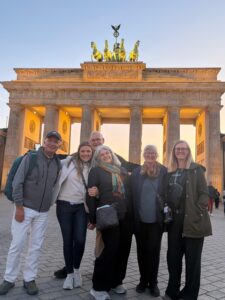
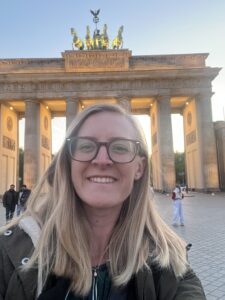
Heimat is shaped by culture, memory, and community. It is often rooted in childhood. It is in the sights, smells, tastes, and relationships that formed us. It carries a sense of safety, belonging, and orientation in the world. It is, in many ways, the feeling of being at home.
And yet, home is more than a place. With my Mimi being from Germany, I feel a surprising sense of belonging here. There is something about the language, the directness and precision of communication, that feels familiar and grounding, even though I have only visited a few times. Before moving to Richmond, I lived in Knoxville for a year and a half, and I often find myself calling that place home. The view of the Great Smoky Mountains from the farm, the sound of my First Presbyterian family singing, and the people who claimed me as their own all root me in a deep sense of Heimat.
What makes us feel at home is different for each of us. And yet, I am beginning to wonder if our truest and most constant sense of Heimat is ultimately found in God. God meets us both in despair and in hope. Through the gift of our senses, we can remember, to feel, and to belong, even in places marked by profound loss. This travel seminar is pushing all of us to reflect on our own identities while leaning on each other and I cannot wait to see where else God takes us in the next week.